Sponsored Links
Our FREE E-LEARNING AUTOMATED REVIEWERS

Topics
- Education
- Science
- Mathematics
- History
- Literature
- Home Economics
- Physical Education
- Music and Arts
- Philosophy
- Philippine Studies
- Language Studies
- Social Sciences
- Debate
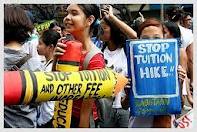
- Extracurricular
- Religion
- Preschool Lessons
- Journalism
- Life Lessons
- Others
- TLE
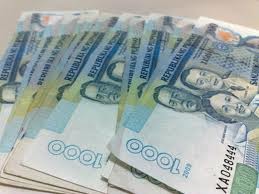
- AP (Social Studies)
- EsP (Values Education)
- Filipino
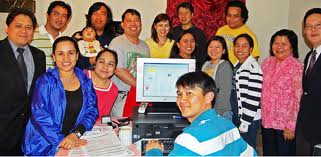
- English

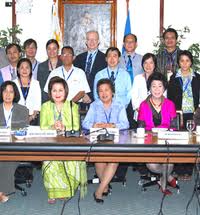
46 Important Information about PCER
 THROUGH EXECUTIVE ORDER NO. 46, President Joseph Ejercito Estrada on December 7, 1998 establishedthe multisectoral Presidential Commission on Educational Reform (PCER) that would craft a "budget feasible" program to address the concerns in equipping Filipinos with world class education.
"Without world class education, we Filipinos will remain a nation of low cost wage earners and outcasts from the highly competitive global labor market," Estrada explained.
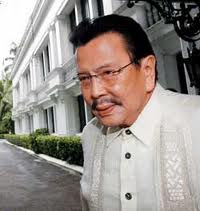
The following are some of the information we need to know about PCER.
Rationale
1. Some important findings of the Congressional Commission on Education (EDCOM) in the early 1990's remain to be acted upon.
2. It was believed that many important changes have taken place in education, culture and science since the EDCOM study.
 3. This is in line with the 10-point action plan of the Estrada Presidency, where PCER is to define a budget-feasible program of reform, and identify executive priority policy recommendations and items for a legislative agenda on education.
Composition
4. PCER is a multi-sectoral body. It was comprised of representatives from government line agencies, public and private schools at all levels, teachers, private industry, NGOs, and other concerned sectors.
 (To be specific, it is composed of representatives from government line agencies, the University of the Philippines, the Open University - University of the Philippines; public and private schools at all levels; teachers; the agriculture and industry sectors; the information technology sector; state colleges and universities; and other concerned sectors.)
Structure
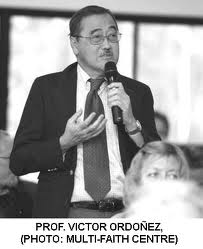 5. It was headed by a Chairman appointed by the President: Dr. Victor Ordoñez(UNESCO Regional Director for Asia)
6. Its Secretariat was housed within DECS, headed by a full-time Executive Director: Dr. Emma Castillo.
7. Members: the Secretary of Education, Culture and Sports; the Chairman of the Commission on Higher Education; the Director-General of the Technical Education Skills Development Authority; the Director-General of the National Economic Development Authority; a representative of the Philippine Chamber of Commerce and Industry and a representative from private agriculture; representatives each from the Department of Interior and Local Government; Department of Science and Technology, The University of the Philippines, Department of Finance, the state colleges and universities; superintendents; public and private school teachers; private and public school associations.
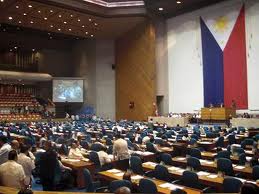 8. According to EO 46, “The Education Committee Chairmen of the Upper and Lower Houses will be invited to attend meetings ex-officio either personally or through their representatives.”
9. Included also is the working committee to assist the Executive Director.
Coverage
10. Ideally, the Commission has to define a comprehensive and a budget-feasible program of reform in 9 areas (a to i):
 11. a) Curricula, teaching methods, instructional media, education technologies, textbooks, language policy and school calendar in use at the elementary and secondary levels, using international benchmarks.
12. b) Modernization of science laboratories, improvement of science and mathematics education and the feasibility of establishing regional centers of excellence in science education.
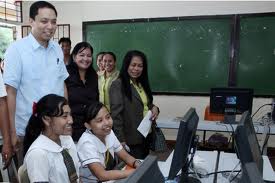 13. c) Upgrading of computer classrooms, computing facilities and internet access in all schools that meet eligibility standards for administering such programs.
14. d) Expansion, modernization and standardization of our vocational and technical institutions, especially polytechnic colleges and universities.
15. e) Distance learning and continuing education programs, especially for adults and out-of-school youth, with a view towards possible eventual accreditation.
 16. f) Tuition financing schemes intended to bring the effective purchasing power of students in line with the real costs of tertiary education.
17. g) Programs, resources and facilities of state universities and colleges, other than UP, with the intention of rationalizing their academic offering and aligning them with employer requirements in their respective areas.
 18. h) Governance, organization, programs, resources, and facilities of the University of the Philippines, with a view towards developing its flagships campus in Diliman into one of the top ten universities in Asia in time for the UP Centennial in 2008.
19. i) Other priority areas of concern in education that arise from the research and consultations conducted by the Commission.
Process
20. The report and the recommendation would be drawn from an analysis by the Commission of the Philippine educational system, based on research of existing studies and other secondary sources of data, on extensive consultations with different sectors, and on interviews with key persons in the system.
Time Frame
 21. “The Commission will start its work upon the signing of this Executive Order (December 7, 1998), and submit its final report and recommendations to the Office of the President of the Philippines one-year thereafter.”
Operating Requirements
22.“The DECS shall provide the sum of P4M annually to be sourced from its existing budget for the operating requirements of Presidential Commission on Educational Reform (PCER) including the payment of compensation of its Chairman/Members in the form of honoraria or per diem…”
23. According to EO, the Chairman is to receive P10, 000.00 per month;
24. The eighteen (18) Members are to receive P3, 000.00 each per month;
25. And the Executive Director, P20, 000.00 per month.
Undertakings
 26. a) Regular/Monthly meetings: PCER has two sets of monthly meetings: (1) a regular meeting of the Commission, scheduled every third Thursday of the month and (2) a meeting of each of the six Working Committees scheduled one after the other every last Thursday/Friday of the month. (The first six months of regular Commission meetings saw substantial brainstorming discussions on what ails the country's educational system. Likewise, a review of past surveys was done.)
 27. b) Workshops: Two workshops were held; the first one consisting of two phases Phase A, on April 19, where the Working Committees met separately to brainstorm and identify items of reform needed in their respective area and Phase B, on April 29, where all the committee members met in plenary to listen to what each Committee had decided re possible reform measures and later identified cross-cutting areas of reform.
The second workshop was the one held on June 16, 1999 in which the initially identified recommended reforms were reviewed. These final recommended reforms were presented at the July meeting of the Commission.
28. c) Information Drive: The Secretariat came up with its official publication called the PCER Chronicle, a quarterly newsletter which capsulizes various activities/events held by PCER.
 29. d) Other activities: Taking advantage of the National Educators' Congress held in Baguio City on May 17 - 21, 1999, a questionnaire survey was conducted. The questionnaire that was used incorporated exactly the reform items identified as of the April 29 workshop. Three hundred thirty nine respondents participated: 22 Regional office staff (plus some Regional Directors and Assistant Regional Directors), 53 division office personnel (including the top division officials), 77 supervisors, 47 high school principals, 96 elementary school principals, and 44 teachers. Results of the survey confirmed the existence of a need for reform in the areas as identified by PCER.
Results/Findings
 30. After 13 grueling months of extensive study,the report named, “Philippine Agenda for Educational Reform: The PCER Report”was unveiled to the public on April 10, 2000 in a turn-over ceremony held in Malacañang, with President Joseph Ejercito Estrada as Guest of Honor.
31. It did not have to start/do its own survey and research studies for previous ones from the earliest to the most recent have been relied on as sources of valuable inputs.
 32. Some of the studies considered were the Monroe Survey (1925), the Commonwealth Survey (1936),
  the UNESCO survey (1949), the Swanson Survey (1960), the Presidential Commission on Philippine Education (PCSPE-1969), EDCOM (1991), the Medium Term Philippine Development Plan (MTPDP, 1999), and Education Sector Study (PESS-1998) and many internet sources.
33. Delors’ (1996) Learning: The Treasure Within, report of UNESCO’s International Commission on Education has also guided the Commission’s work.
34. PCER’s mandate revolves around ten, but later conflated into six, priority areas of concern: Financing (FIN); Governance (GOV); Information Technology, Science/Math Education and Other Technologies (ITSMEOT); Medium of Instruction (MOI); Quality Assurance (QA); and Teacher Development and Welfare (TDAW).
35. Six committees corresponding to said six areas of concern were formed. Each committee had a Working Committee composed of some of the Commissioners themselves and consultants.
36. Nine major reform agenda items were identified as reforms that can be done immediately and are budget-feasible. These are (a to i):
 37. a. Establishment of the National Coordinating Council for Education (NCCE)—calls for greater coordination among departments (DECS, CHED
 and TESDA), a common approach to trans-sectoral issues such as assessment mechanism and articulation between levels, and a more harmonized approach to total education planning and resource allocation.
38. b. Rationalization of the Creation and Conversion of State Universities and Colleges—suggests a moratorium on the creation of new ones and conversions of high schools into colleges while a rationalization plan is being designed and prepared.
39. c. Reorienting the Premises of Financing Public Higher Education—recommends that financing public higher education institutions must be based on fulfillment of students demand, equity of access, and program considerations, as well as greater accountability and efficiency.
 40. d. Establishment of a One-year Pre-baccalaureate System—this proposal recommends a one-year period between secondary education and a tertiary degree program (to bring the Philippines at par with other countries and ensure readiness of high school graduates for tertiary education)
 41. e. Faculty Development at the Tertiary Level—it prescribes that teachers at the tertiary level must have a Master’s degree in the field in which they teach. (Plan: to launch a nationwide system using a network of key centers of teacher training to raise the numbers of qualified teachers with Master’s degree from 30% to 70%.)
 42. f. Strengthening Teacher Competencies at the Basic Education Level—empowering them in four key specific key result areas or KRAs (ability to teach reading and comprehension, initiative and creativity, training in values education, and a familiarity and use of instructional technology) through a program that is in-service, innovative, nationwide, and conducted in a decentralized manner.
43. g. Expanding the Options for the Medium of Instruction in Grade 1 Through the Use of the Regional Lingua Franca or the Vernacular—While re-affirming the Bilingual Education Policy and the improvement in the teaching of English and Filipino, this proposal aims to introduce the use of the regional lingua franca or vernacular as the medium of instruction in Grade One.
44. h. Establishment of the National Educational Evaluation and Testing System (NEETS)—it envisions a body that can coordinate and harmonize various existing agencies and efforts in this field, and assume responsibility for educational assessment at all levels (basic education, higher education and technical education and skills development).

45. i. Establishing Common Standards for Accreditation Per Discipline—There are four accrediting agencies operating in the Philippines which use different procedures and standards.
The fate of PCER
46. From its unveiling to the public by Pres. Estrada on April 10, 2000, his government expected that the PCER findings will be implemented within the next two years (2001-20010).
But in October 2000, Estrada became mired in a corruption scandal, and the House of Representatives impeached him in November. The impeachment trial in the Senate was suspended in mid-January 2001 after the prosecution team resigned to protest the suppression of evidence. Thousands of Filipinos staged massive demonstrations in the streets of Manila to demand Estrada’s resignation. Faced with loss of public support, defections of important cabinet members, and transfer of key military support to the political opposition, Estrada was forced from power on January 20, 2001. 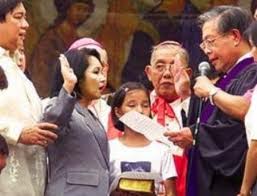 The Supreme Court declared the presidency vacant, effectively ousting Estrada from office, and Vice President Gloria Macapagal Arroyo was sworn in as president.
The Supreme Court declared the presidency vacant, effectively ousting Estrada from office, and Vice President Gloria Macapagal Arroyo was sworn in as president.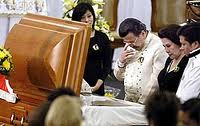 The demise of Estrada administration virtually meant the death of PCER!
Subjects:
Sponsored Links
OurHappySchool RECOMMENDS


Add new comment